HOW IS THE APPROACH APPLIED
AT MEŞEPALAMUDU CHILDREN'S HOUSE?
IMAGE OF THE CHILD
"If you break the image of the child in your mind, look at the child in front of you with naked eyes, and truly listen to them, you can begin to see the real child," says the Reggio Emilia Approach. What is a child? How do they learn? How do they discover? It challenges us to ask ourselves these foundational questions, followed closely by "What is a school?" and "What is education?" It instructs us to act as if we know nothing, as if there is no single right answer. This approach constantly asks questions but offers few strict answers, precisely to avoid creating rigid molds. Instead, it urges educators to seek answers within their own culture and environment. It is not a predefined model or system to be blindly copied.
Since 2005, we have structured our practices at MeşePalamudu Children's House based on this principle, drawing inspiration from Reggio Emilia while adapting it to our local city and school culture. Rather than merely repeating the theoretical framework of the Reggio Emilia Approach, we believe it is more meaningful to explain how we interpret it within our own context, highlighting the specific elements that inspire us.
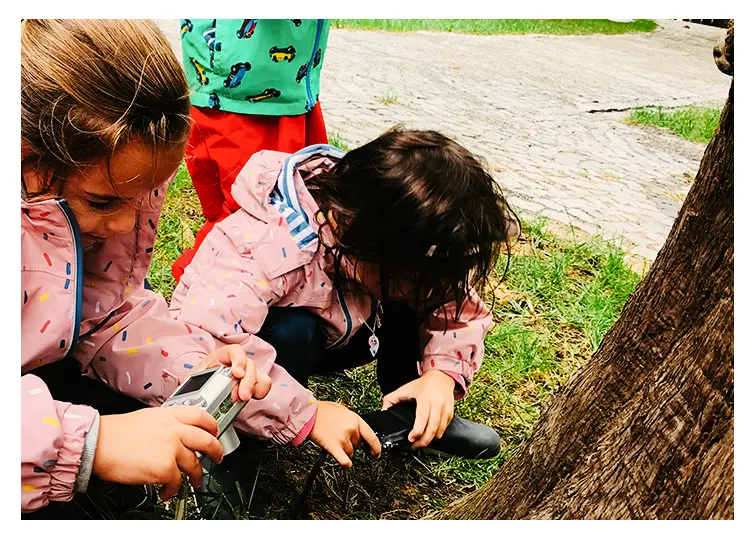
We'd like to illustrate this with a story about trees, fitting for our school's name. Every year, our children select a "class tree" in Yıldız Park, where they spend two days a week. Hearing that "a class tree is chosen every year" might make it sound like a rigid curriculum, a set program, or a standard activity. You might wonder, "I thought Reggio Emilia didn't have a set curriculum or pre-planned activities?" That's entirely true. At MeşePalamudu, we do not follow a pre-packaged curriculum, and this yearly tradition is far from a standard activity.
Because every year, something completely different unfolds.
Every child is unique, every class dynamic is distinct, and every year children arrive with new perspectives or simply older and more observant. The trees themselves are different. You might think, "A tree is just a tree, and a 'little child' can only perceive so much." But that assumption comes from our own biased image of a child. This is where Reggio Emilia's advice to "look at the child with naked eyes and listen" becomes vital. Children are uniquely perceptive; trees are complex, and the seasons constantly shift. To notice these nuances, one must look closely and with fresh eyes every single time.
Choosing a class tree can sometimes take months. If teachers view the children's debates and indecision not as a delay but as an opportunity—if they are truly listening and curious—a deeply authentic learning process begins, driven entirely by the children. The teacher's role is to document what the children are saying. If a child suggests, "We should pick the biggest tree in the park," the teacher asks, "Which one do you think is the biggest?" to understand how the children define size. The teacher sets aside their own adult concept of "big" and strives to understand the children's logic. True education here isn't about feeding facts to a child; it's about validating their hypotheses. A teacher who provides a concrete environment for children to test their ideas, without immediately labeling them as "right" or "wrong," opens up profound pathways for learning.
Is there anything more joyful for a teacher than discovering alongside the children which tree in Yıldız Park is truly the biggest? It's a challenging journey. It might require examining every single tree over the course of months. Do the children get bored? No. They are engaged in a real task, driven by their own decisions and fueled by a growing curiosity. Children love engaging with reality; what bores them is being confined to simplistic, adult-imposed tasks.
To find the biggest tree, they have to figure out how to measure it. Does "biggest" mean the tallest? The widest trunk? The most leaves? How will they measure the trees, and what tools will they use, especially when they are only just learning to count?
We find the answers to these questions in the rich documentations kept by our teachers. But if you are a parent reading this, we encourage you to embark on a similar adventure with your child. If you are a teacher, chase these questions with your students. Experiencing education through this lens is how you begin your own journey inspired by the Reggio Emilia Approach.
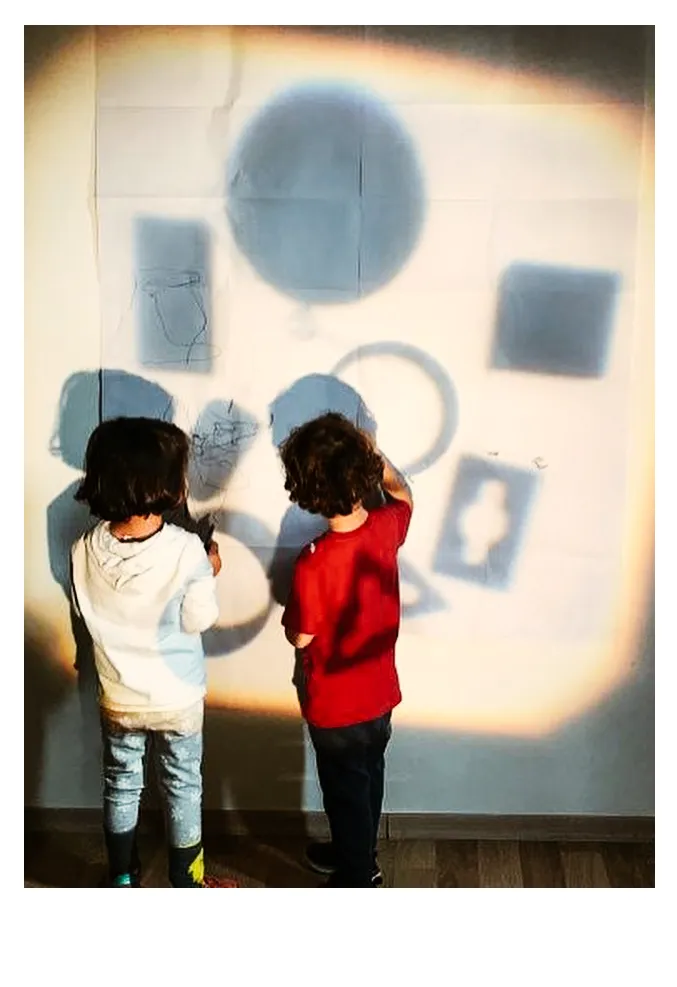
The journey we just described is what Reggio Emilia calls a "Project." In early childhood, projects must unfold in concrete environments where children can actively use their senses to construct knowledge. During these projects, children utilize their "Hundred Languages"—drawing, sculpting with clay, moving their bodies, and more. Their words are meticulously captured through notes and recordings. Every drawing, even seemingly simple scribbles, is evaluated because it reveals their thinking process. If a child jumps to demonstrate how tall a tree is, that physical expression is documented. Through this careful observation, teachers make the children's cognitive processes visible. For instance, when our students tried to design a tool to measure the trees, their drawings revealed their developing concepts of size and quantity. To make numbers concrete, they designed their own measuring tapes decorated with symbols they understood, naming them "stone meters" or "dinosaur meters."
Through this story, we've touched upon the core tenets of the Reggio Emilia Approach as interpreted at MeşePalamudu: the role of the teacher, the project method, the languages of the child, and the power of observation and documentation.
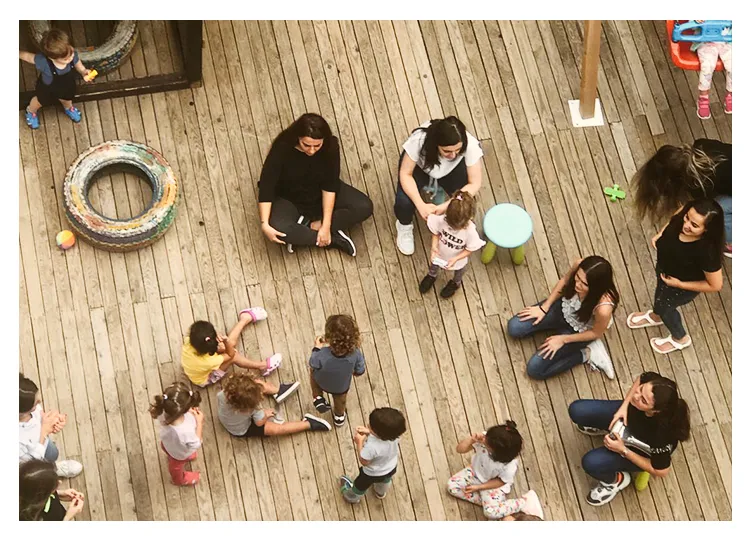
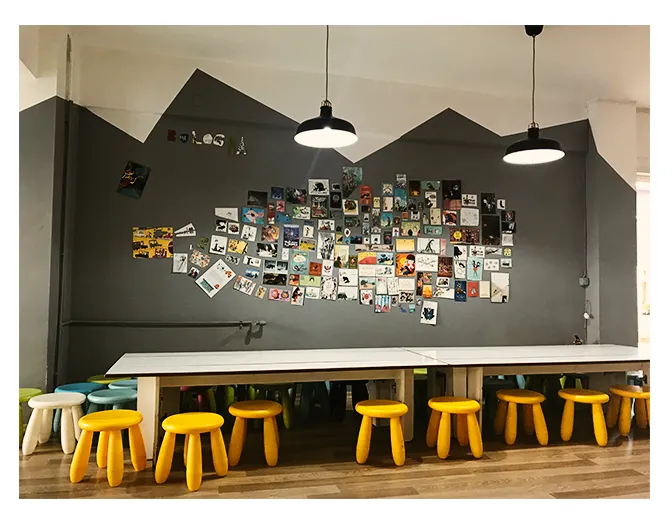
Below, we share visual glimpses from our Children's House to further illustrate these concepts.